| |
| |
|
|
| |
|
|
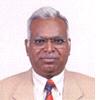
Prof. S. Narayana, Professor in Aurora’s Technological & Research Institute, Hyderabad is a fraduate in Electronics and Communication Engineering from Osmaina University and M.Tech in Advanced Electronics from JNTU. Started his career in DRDO, where he worked in the field of Missile Guided Radar and Subsequently moved over to the National Geophysical Research Institute (NGRI), CSIR in 1976 and retired as Scientist ‘G’ in June, 2008. He engaged himself in the design and development of variety of Geophysical Instruments using “State of the Art Technology” for the investigation of ground water, minerals and engineering studies, which are simple but of tremendous use to people. The technical know-how of these instruments has been transferred to industry for commercial production. He is recipient of number of Honors & Awards which include Best Invention Award, Engineer of the year award-2000, Best Scientist/Engineer in the State for the benefit of Industry, Trade and Agriculture-2002 and IETE Hari Ramji Toshniwal Gold Medal-2004.
Prof.S.Narayana served Hyderabad Local Centre and IETE Council in various capacities. Due to his dedication, sincere efforts and active participation in the growth of IETE has was elected as President of the year 2006-07 and again re-elected unopposed for the year 2007-08.
The IETE under the leadership of Prof.S.Narayana has progressed in all directions due to his vision, zeal and leadership. IETE’s Foundation Day and the IETE Convocations were celebrated for the first time due to his initiative. It is also for the first time he conceptualized, a meeting of all the Office Bearers of the Centers/Sub-Centers to be held soon after they assume office. His vision saw that exam procedure is automated so that results are declared faster. To improve the quality of IETE Journal, steps were taken to have online submission and review system. During his tenure, IETE Membership increased from 52000 to 69000, the Centres increased from 52 to 55. He put enormous efforts to improve the infrastructure of the Centres which resulted in Six Centres and acquiring own office buildings. He is responsible for establishing Placement Cell and Alumni Association at IETE HQ.
The IETE Hyderabad Centre can not forget his zeal and untiring efforts in getting the construction of building complex including Mekaster Auditorium of Hyderabad Centre. Acknowledging his selfless service, contribution and vision, IETE in general and Hyderabad Centre in Particular this Centre instituted an “Annual Endowment Lecture” in his honour. |
|
| Programmes Sub-Committee, IETE Hyderabad. |
| Er. Nuli Namassivaya, Chairman. |
Dr. K. Ravindra |
| Dr. K. Jaya Sankar |
Sri. P. Srinivasulu |
| Dr. Niranjan Prasad |
Dr. D. Krishna Reddy |
| Prof. KSR Murthy |
Er. P. Naveen Kumar, Convenor |
| |
| |
|
|
THE INSTITUTION OF ELECTRONICS AND
TELECOMMUNICATION ENGINEERS
HYDERABAD CENTRE.
|
| |
|
2709 8025. |
|
|
| Cordially invites you to |
|
|
1st Prof. S. Narayana Endowment Lecture |
|
|
Dr. Surendra Pal |
Distinguished Scientist, Associate Director & Programme Director,
Satellite Navigation Programme, ISRO Satellite Centre, Bangalore |
|
|
will speak on
“THE GLOBAL NAVIGATION SATELLITE
SYSTEM (GNSS) – AN INDIAN PERSPECTIVE” |
|
|
Dr. V. Gunasekhar Reddy
Chairman, IETE, Hyderabad Centre
will preside |
|
|
on Friday, the 26th June, 2009 at 6.30 p.m.
at IETE, OU Campus, Hyderabad |
|
|
| K. Subbi Reddy |
Er. Nuli Namassivaya |
| Honorary Treasurer, IETE |
A/c Honorary Secretary, IETE
Chairman, Programmes Committee
Cell : 93460 17700 |
| The programme followed by Dinner |
|
|
|
| |
|
|
| |
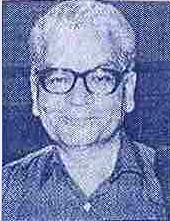
Dr. Surendra Pal |
|
Dr. S Pal, an alumnus of Birla Institute of Technology & science (BITS), Pilani and Indian Institute of Science (IISC), Banglore, India is presently Distinguished Scientist & Associate Director and also Prog. Director, Satellite Navigation Program & also Assoc. Director at ISRO Satellite Centre, Banglore.
He joined Indian Space Research Organization (ISRO) in 1971, after a brief tenure at Tata Institute of Fundamental Research. Dr. Pal pioneered the Microwave & Antenna & RF communication activites at the ISRO Satellite Centre at the inception. He has been responsible for the development & fabrication of all spacecraft related telecommunication systems for india’s all satellites beginning with Aryabhatta to the present day IRS & INSAT series of spacecraft & Chandrayan. Dr. Pal is also responsible for pioneering satellite based navigation activites in India. He is spear heading the Indian Satellite Based Wide Area Augmentation System-GAGAN (GPS Aided Geo Augmented Navigation System) & Indian Regional Navigation Satellite System (IRNSS) activities for aviation for civilian & restricted users. GAGAN Technology Demonstration Phase has been successfully completed and Final Operation Phase has been taken up.
He has been consultant to: (i) INMARSAT/ICO (UK) for LEOSAT definitions, responsible for the development of Satellite Hand Held Telephone Antenna System for ICO (UK) (ii)International Telecommunication Union (ITU) for defining Regional African Satellite Communication System and (iii) Nanyang Technological university, Singapore on X-Sat. He was also Chairman of Information Infrastructure Working Group of Ministry of Information Technology. He had also carried out special antenna developments for DRDO-India.
He is also on the United Nations panel of experts on Global Navigation Satellite Systems (GNSS) and Chaired/participated in various UN meetings at Vienna, Geneva and at other international venues. Dr. Pal a Distinguished Fellow of IETE, Fellow of Indian National Academy of Engineering, Indian National Academy of Sciences, Fellow IEEE(USA), MAMTA(USA), MASI, has received more than a dozen national and international awards, including, Performance Excellence Award by ISRO, Distinguished Achievment Award for launching Aryabhatta, Om Prakash Bhasin Award, Hari Om Ashram Vikram Sarabhai Award, IEEE Third Millennium Medal, Prof. S N Mitra Memorial Award (INAE). He has delivered many memorial lectures including IETE 39 th ram Sarabhai Memorial Lecture.
Dr. Pal has published more than 200 papers in international and national journals of repute, one book on communications & guided number of Ph.D students. He has been on the editorial book on communications & guided number of Ph.D students. He has been on the editorial board of various technical journals. He was a Distinguished Visiting Professor of Indian National Academy of Engineering & presently he is on the Distinguished Lecturer Programme of IEEE-USA. He was Co-convener of International Radar Symposium (IRSI) 2005,2007 & responsible for starting International Microwave Symposium ISM 2004,2006,2008 and arranged International Symposium on Measurements & Robotics ISCMR (2008) at Banglore. His fields of interest are Microwave Communications, Space Technology, Electromagnetics, Antennas and Satellite Navigation. |
|
|
| SYNOPSIS |
THE GLOBAL NAVIGATION SATELLITE SYSTEM (GNSS) – AN INDIAN PERSPECTIVE |
(A vast system of systems providing global positioning, navigation & timing information to scores of user community) |
Conventional Satellite technology has got three applications: Communication, Remote sensing and, Scientific studies. The latest one to add to this list is Satellite Based Navigation also referred as Satellite Navigation/ Global Positioning System and lately termed as Globa; Navigation Satellite System (GNSS).With the technological advancement taking place in mobile communications, controls, automobiles, aviation, geodesy, geological survey, military operations, precision farming, town planning, banking, weather predictions, power grid synchronization etc., inspite of each one having separate domain, there is one thing common in all of them for their future; that is the Precise-position, Timing and Velocity (PVT) – information, which can only be provided by Global Navigation Satellite System (GNSS).
Global Navigation Satellite System (GNSS) is a vast system of systems, providing global positioning, navigation and timing information to scores of users in oceans, land, air and even in space. The paper/talk traces the history of navigation, evolution of navigation satellites, the three present constellations and a world scenario in this direction. India has taken a significant step in this direction, with its SBAS system GAGAN and deployment of its own Regional Navigation Satellite Constellation (IRNSS). The talk will touch upon the various GNSS connected aspects, their applications and the Indian perspective. |
|
|
|
|